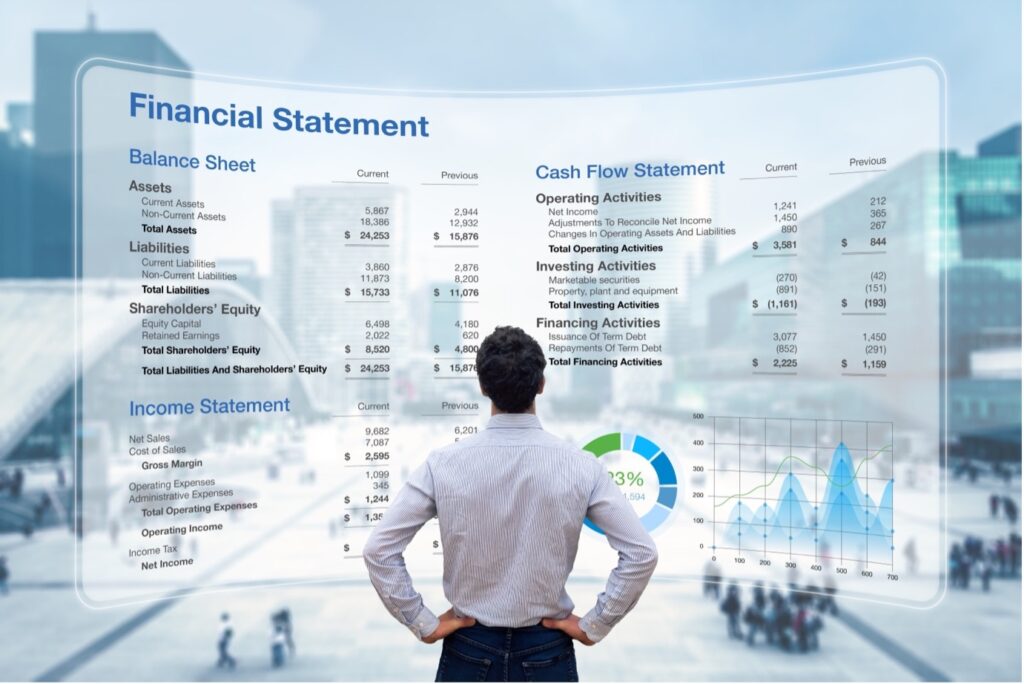
For some, numbers are just numbers, but for others, they tell a story. In business, numbers can tell many different stories. The story you tell with your business will depend very much on the bookkeeping system you choose. Today, we will share the many types of bookkeeping there are, and discuss how they can help create the story of your business dreams. Let’s open the pages and explore the captivating world of bookkeeping services!
1. Single-entry Bookkeeping
The classic foundation of any small business’ bookkeeping story must include the ins and outs of all financial transactions. It’s either a debit – you spent it, or a credit – your earnt it. Basic as it may sound, if the financial flow of the ins and outs are not recorded, there will be no framework on which to build your business success tory.
Single-entry bookkeeping systems are ideal for small or micro businesses that deal with simple business practices such as cash receipts and cash expenses. It does not take into account assets or liabilities because, as its title suggests, it accounts for a single entry in and a single entry out. For simple, uncomplicated businesses it might be informative and concise enough to tell the story of that enterprise.
2. Double-entry Bookkeeping
Double-entry bookkeeping unravels the interplay between assets, liabilities and equity, by providing a comprehensive view of a company’s financial landscape. In other words, it starts to add substance to the framework of your business story. This system is based on the mantra that every transaction must involve something coming in and something going out – debit and credit – and then builds on this simple system to incorporate timing, merchandise, inventory, and customers.
There are two types of bookkeeping services associated with double-entry bookkeeping, one being a slower read, while the other a fast-paced, action-packed, but often more detailed read, they are:
– Traditional Double-entry bookkeeping
Traditional double-entry bookkeeping involves manually recording financial transactions in two separate columns. Transactions are recorded in at least two accounts, one will be a debit, the other a matching credit. It follows the rules that Assets = Liabilities + Equity. Traditional double-entry bookkeeping is a manual process where transactions are written or recorded in a ‘book’ (hence book-keeping), which was also known as a journal or ledger.
– Modern Double-entry bookkeeping
Modern double-entry bookkeeping, also known as enhanced double-entry bookkeeping, includes additional features and functions to make the process more efficient and accurate. It utilises modern bookkeeping software and technology to automate tasks, generate reports, and provide real-time financial information to build a more comprehensive, detailed and dynamic storyline for the business. It incorporates advanced features like bank reconciliation, fixed asset management, inventory tracking, and integration with other business systems.
3. Cash Basis Bookkeeping
Cash basis bookkeeping is a method where simplicity meets practicality. It is based on actual cash inflows and outflows. Transporting the small business owner to a realm of tangible exchanges and immediate gratification – akin to counting coins and seeing financial results unfold in real time. This method provides a simple, straightforward way to track financial activities, especially for small businesses or individuals with simple financial transactions. Transactions are recorded as being finalised when money actualy changes hands; ie leaves your pocket (or bank) or is received. While correct and direct, it may not accurately represent a business’s financial health or performance, as it ignores non-cash transactions and timing differences between cash flows and revenue or expense recognition.
4. Accrual Basis Bookkeeping
Accrual basis bookkeeping offers a futuristic view of your business story. Unlike a cash basis, it records transactions when they’re earned (invoiced to a client) or incurred (billed by a supplier) rather than when the actual cash changes hands. It follows a trail of future financial events, leaping forward or backward to understand the true nature of a business’s financial story. It anticipates long-term obligations and revenues, allowing you to witness the unfolding implications of past and future transactions. It’s kind of like telling you the end of the story before you finish the book – if that’s what you like.
– Modified Accrual Method
A more conservative method of Accrual Bookkeeping is the Modified Accrual method. Modified accrual bookkeeping only records transactions when cash is received or disbursed, focusing more on the short-term or immediate cash flow story than the end of the story.
5. Hybrid Bookkeeping
As the word suggests, hybrid is a combination of two types of bookkeeping services – traditional and technology-based. Hybrid bookkeeping typically incorporates the use of digital tools such as bookkeeping software, cloud storage, and online banking platforms to streamline the bookkeeping process and improve accuracy and efficiency. This approach allows businesses to benefit from the convenience and automation of technology while still preserving the human element of bookkeeping expertise. By leveraging the advantages of manual and computerised bookkeeping services, hybrid bookkeeping aims to provide a balanced and tailored approach to financial management. Your financial story becomes dynamic.
6. Online Bookkeeping
Online bookkeeping is an efficient way of managing financial records and transactions through internet-based software or platforms. It allows for real-time data entry, information sharing, and collaboration between accountants, bookkeepers and clients. It reduces the need for physical paperwork, increases the accuracy and accessibility of financial information, and streamlines financial processes. This allows you to manage and monitor your business’ financial story anywhere, anytime.
– Single Source Online Bookkeeping Services
Single-source online bookkeeping services refer to a type of financial management system that provides all the necessary tools and functionalities to maintain accurate and up-to-date books of accounts for businesses in a digital format. In essence, it encapsulates all of the above in one single application.
These services typically involve using cloud-based software that allows multiple users to access and manage financial data from anywhere with an internet connection. With adequate protection (eg encryption, Multi-factor Authentication and Virus controls) this type of bookkeeping service allows for cost-effectiveness, time efficiency, accessibility, convenience and real-time financial insights. What a way to tell the real story of your business anywhere, anytime.
7. Desktop Bookkeeping
Desktop bookkeeping refers to the practice of using bookkeeping software installed on a desktop computer. Like online bookkeeping, it involves tracking income, expenses, assets, liabilities, and other financial aspects to ensure accurate financial management but keeping everything in-house. The advantages are that you can control sensitive financial information through firewalls and other security measures. It doesn’t require an internet connection, and if needed, can be isolated from external/online access.
While desktop bookkeeping has some advantages, it’s worth considering the limitations, particularly when compared to cloud-based bookkeeping services. These contraints include the potential risks of theft, destruction, data loss, limited collaboration capabilities, and the need for manual backups. As technology advances, more businesses are shifting towards cloud-based bookkeeping software due to its accessibility, real-time updates, automated backups and ability to integrate with other software and services.
Exploring Numble-Specific Bookkeeping Services:
1. In-house Bookkeeping Services
With all our staff based within Australia, we can provide both in-house and remote bookkeeping services to all areas. However, in a world where every minute counts, costs count and with the ease of modern online services and applications, we highly recommend our remote services. Having your bookkeeper work offsite in their own office allows for efficiencies in time, travel, costs and work environments. We all love an opportunity to cost save without sacrificing quality.
2. Registered BAS agents
We are a company committed to excellence and compliance. We understand the importance of knowing and understanding government and industry standards. All Numble staff are located in Australia and have relevant Australian qualifications.
Numble provides registered BAS agents who are qualified and trained to navigate the complexities of GST, BAS, business compliance, who all meet the Tax Practitioner Board Code of Conduct requirements. Through continual updating of training and experience, our staff work actively to meet, and exceed, those standards. We are ready to help you safely write your financial story.
3. Specialist Bookkeepers
Nothing is too hard for our Numble Team to tackle. Numble has a great team of bookkeepers, all trained and ready to service your bookkeeping needs no matter what type of service you require.
Our shared experience spans many software systems, industries, and business models. Numble offers mentoring and Continuing Education Opportunities to all staff – to ensure they remain at the top of their game. Through understanding, education, communication and implementation, we’ll co-create the best bookkeeping service you can imagine.
4. Extra Qualifications
Some of our bookkeepers are qualified accountants; others have advanced diplomas in finance or bookkeeping. All our staff have industry qualifications in software related to our bookkeeping services. Numble bookkeepers keep up to date with the latest ATO compliance and software training through our CPE (Continued Professional Education) programme.
Summary
So, whether you’re captivated by the simplicity of single-entry, enticed by the complexity of double-entry, intrigued by the practicality of cash basis, fascinated by the futuristic nature of accrual basis, or simply seduced by hybrid, online or desktop services, bookkeeping services has a story to tell for your business’s financial future. Are you ready to embark on your own bookkeeping adventure?
Ultimately, the importance of bookkeeping services for your business is found within the numbers. What story do you want to tell with those numbers, and how do you want to track them? Bookkeeping services are critical to keeping you up-to-date with your business numbers.
Do you need help reading and comprehending your bookkeeping story? Contact Numble today for expert assistance every step of the way. We offer free consultations for small businesses. For more insights, expertise, tips, and tricks, visit our blog page.